
A recall effort against Town Council member Max Tassinari has failed by a wide margin, marking the latest in a string of defeats for a small but persistent group of Winthrop residents and outside allies.
As town officials wrapped up their count of the signatures submitted by opponents of Mr Tassinari, they found the opponents had collected only about 2,000 signatures, well short of the 2,863 required to schedule a town-wide vote on the question.
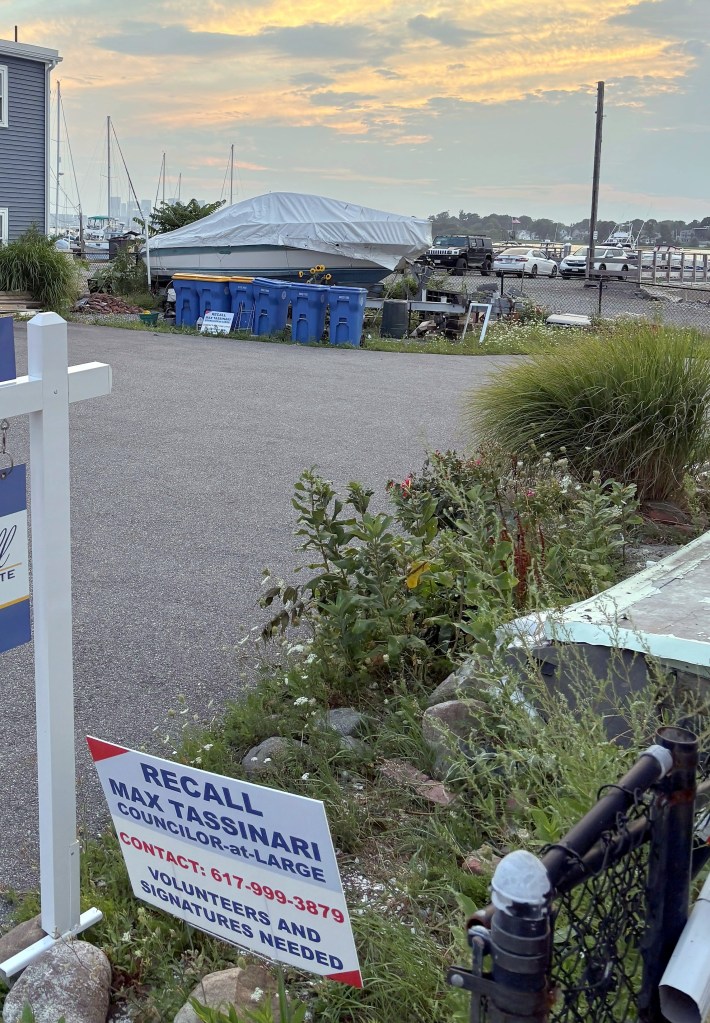
Mr Tassinari won election to a four-year at-large seat on the Town Council in November 2023 by a nearly 2-1 margin among voters town-wide. But a mix of local and out-of-town allies nevertheless waged the recall campaign, raising a variety of complaints, largely centering on their opposition to a statewide housing law.
The law, known as 3A, requires nearly all cities and towns around Boston to increase the share of their community that allows multifamily housing or face cuts in state funding. The state law doesn’t actually require any new housing in Winthrop, because of the town’s existing high density. But the opponents, including Winthrop’s Town Council president, Jim Letterie, have complained that even granting technical agreement with the law feels like a surrender of authority – even though the state government holds clear constitutional authority over zoning matters.
With one current vacancy on the nine-member Town Council, Mr Tassinari is among four members who have concluded that technical compliance with 3A is better than subjecting Winthrop taxpayers to the potential loss of hundreds of thousands of dollars in state aid and the legal fees necessary to defend the law-breaking.
The group calling for Mr Tassinari’s removal was led by a daughter of another Town Council member, Suzanne Swope. The recall group has previously waged failed removal campaigns against council members Hannah Belcher and Joseph Aiello, and threatened such campaigns against council members John DaRos and John Munson.
Opponents of the recall effort said that the removal option, outside of a regular election, should be reserved for government officials suspected of high crimes and misdemeanors, and argued that even Mr Tassinari’s opponents never raised those kinds of allegations.
“It is unfortunate that a small group of residents continues to target councilors who disagree with them on how to best address issues impacting our community,” said Cassie Witthaus, a founding member of the community group Winthrop Working Together.
“Now that a third recall effort against a third councilor has failed, I hope they will direct their efforts toward effecting positive change,” Ms Witthaus said. “If they were putting this effort toward knitting blankets for folks in shelters or something with a tangible positive outcome, can you imagine the good they’d be accomplishing for others?”
Massachusetts state Senator Lydia Edwards, who represents Winthrop, had a similar reaction. “I think people are getting exhausted with the fighting and really want some solutions,” Senator Edwards said. “I just want to work on how we get the state money and laws Winthrop needs to thrive.”
Far short of recall requirement
Winthrop municipal rules required the petitioners to collect the signatures of 20 percent of the town’s registered voters to force a ballot question on Mr Tassinari’s removal. In the case of an at-large council member such as Mr Tassinari, that means 2,863 signatures town-wide, and the petitioners got only about 70 percent of that.
Leaders of the recall alternated through their campaign on the question of their primary motive, sometimes listing Mr Tassinari’s willingness to comply with the state’s 3A law, other times citing often-related policy disagreements. The opponents complained about his decision to temporarily abstain from 3A votes while awaiting a clear opinion from Massachusetts officials, who eventually agreed that he did not need to recuse himself because of his employment with the state Department of Transportation.
The opponents also cited his request for the Town Council to clarify the status of a council member with multiple absences, and his disagreement with the Town Council president over the choice of an appointee to fill the vacant council seat.
Leaders of the recall effort accused Mr Tassinari of acting “with arrogance, entitlement, and political manipulation.” One of those recall effort leaders, Sheryl Howard, a local real estate agent, argued that people in Winthrop were afraid to sign their papers.
“If this was on the ballot where one could privately share their opinion, we would have our 3,000 signatures already,” Ms Howard said in one social media posting.
Mr Tassinari, however, won his 2023 town-wide election overwhelmingly, by a 2,652 to 1,368 margin, over an ally of the recall campaigners.
Anti-3A campaigners see no sunset to campaign of division
Despite losing three straight recall attempts, and failing to win any court or legislative battles over the 3A law, the 3A opponents have made clear they intend to keep pursuing ways of bypassing the expressed will of voters at the state and town level.
One of their next steps – with the backing of Mr Letterie, the Town Council president – is to overhaul the town’s very governing structure. Winthrop’s current nine-member Town Council consists of six members who are each elected only by residents of the geographic precinct in which they live. The other three, including the council president, are elected in town-wide votes. The town reviews its organizational charter every five years, and for this year’s review, Mr Letterie appointed a panel that has suggested cutting the Town Council to only seven members, each representing the entire town on an at-large basis, without any precinct distinctions.
Mr Letterie has argued that the change is necessary because too many of the precinct-specific seats in recent years have lacked competitive races, meaning they haven’t had at least two candidates running within the precinct. But multiple academic studies of the question have concluded that at-large municipal elections generally discriminate against smaller demographic groups and require more money to participate.
And opponents of the change in Winthrop have warned that there are other more significant reasons for Winthrop residents being unwilling to enter Town Council races – including, several have told the council, the caustic treatment of Mr Tassinari and others before him in recent years who have been personally attacked to try to force them from office, in a local replication of some of the toxic politics being seen at the federal level.
The formal petition to the town for Mr Tassinari’s removal argued, without citing evidence, that recall organizers were responding to “bad behavior from a self-dealing individual.” And in the final days of the process of collecting signatures on the removal petition, according to multiple accounts, a petitioner collecting signatures outside the US Post Office station on behalf of the recall effort told two young girls in reference to Mr Tassinari: “He’s a bad man and does bad things.”


 Winthrop Pilot
Your input is welcome. We encourage respectful and constructive dialogue. Comments that contain hate speech, personal attacks, spam, or other inappropriate content will be removed. Repeat violations may result in a temporary or permanent ban from commenting.