
The Winthrop Town Council approved an ordinance allowing some single-family home owners to create small separate housing units on their property, in compliance with a state law requiring the legalization of so-called ADUs.
The state requirement was signed into law last year as part of wider efforts to expand housing availability in the state. It forced cities and towns to generally allow ADUs – accessory dwelling units – though with some discretion in how each community implements it.
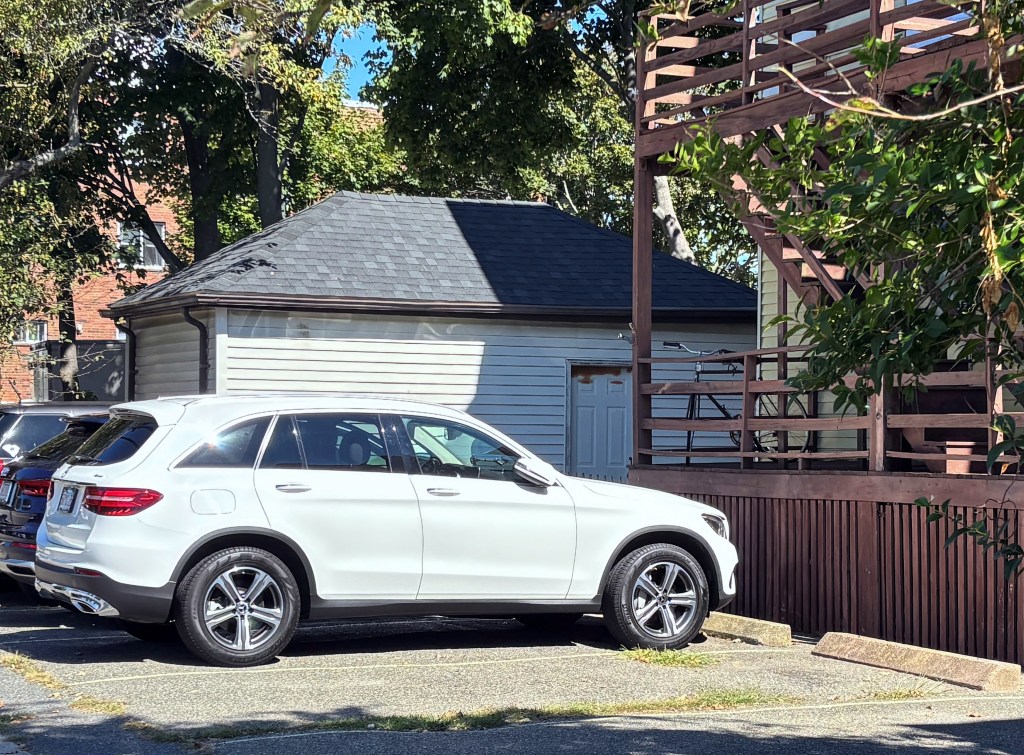
The Winthrop Town Council spent a half-hour Tuesday debating the ADU rule, allowing an estimated 1,600 new housing units in town, before voting unanimously in favor of it. That speed stood in contrast with the ongoing months of emotional debate and caustic battling that have surrounded a different state housing law, the 2021 measure known as 3A, that is understood to require no additional housing units in town.
In their far more rapid consideration of the ADU requirement, several council members made clear they still have a general interest in limiting new housing in Winthrop, saying that they were aiming with their legal language to allow as few ADUs as possible under the new state mandate.
“It is as restrictive as we can be for our community,” the council’s vice president, Hannah Belcher, a supporter of town compliance with the 3A law, said in introducing a measure to formally implement the ADU rules.
The language on ADUs was contained in a 2024 state law known as the Affordable Homes Act. It gives homeowners in districts zoned for single-family residences the general right to build a separate unit on their property measuring less than 900 square feet in interior size. The concept is understood as especially favorable for older people needing family assistance and younger adults not yet able to afford their own homes, and sometimes takes the form of a remodeled garage.
Winthrop’s special status
As with the 3A law, Winthrop has special circumstances limiting the effect of the ADU requirement on the town. In the case of 3A, Winthrop can comply without adding any new housing because its existing density lets it meet the state mandate by rezoning to multifamily status parts of town that already have multifamily complexes. In the case of the ADU law, most single-family homes in Winthrop will not be eligible for ADUs because the state law does not allow them in areas considered part of the federal government’s 100-year flood plain.
That means only about 1,600 homes in Winthrop – fewer than a quarter of the town’s overall residences – should be eligible to build ADUs, town officials said.
The Town Council further limited that right by writing language in its ADU ordinance that reflected the tightest limits that the state law allowed in such areas as unit size and car-parking requirements. The council also eliminated the possibility that a single residential property could host more than one ADU.
The ADU ordinance approved by the Winthrop Town Council also forbids the use of ADUs as short-term rentals. It’s not clear, however, how that restriction would fit with the state law, which has general language forbidding distinctive treatment of ADUs that some experts have interpreted as meaning that ADUs can’t be blocked from short-term rental use if other residences in a town are generally allowed that right.
Winthrop does allow short-term rentals, and the Town Council this summer updated its ordinance on the topic with new fees, town-wide limits, inspection requirements and enforcement strategies.
States and communities across the US have been confronting housing shortages, typically tied to restrictive zoning regulations, that are being blamed for worker shortages and financial stresses on individuals and families. Home prices nationwide are 60 percent higher than their 2019 levels and still rising, according to the Harvard Joint Center for Housing Studies. The median existing single-family US home price last year of $412,500 was five times the median household income, the center found.
ADUs’ mixed record
Massachusetts is one of several states in recent years that have looked at the encouragement of ADUs as part of the solution. Massachusetts has some of the highest housing costs in the nation, and the state chapter of the National Association of Realtors has estimated the state needs 20,000 to 25,000 new housing units each year for the next five years to stabilize price levels. Governor Maura Healey has set a goal of creating 222,000 new housing units over the next decade, and her administration has estimated that ADUs could account for 8,000 to 10,000 of those units in the next five years.
As those numbers indicate, however, ADUs are seen, at best, as a partial solution. That’s especially true given that the Massachusetts law uses the 900 square feet limit – a size that many experts have suggested is too small to create a meaningful surge in their construction.
ADUs generally have met with mixed success in boosting housing. Newton has allowed them for some four decades, but produced only 121 ADU units over that time – raising concern among advocates that its limit of 1,000 square feet was too small to attract interest. The city of Seattle, Washington, meanwhile reported a boom to the point where ADU permits last year were outnumbering approvals of single-family homes by a 2-1 margin.
A commission created by Governor Healey issued a series of recommendations earlier this year, including abolishing single-family zoning restrictions, parking space requirements, and minimum lot size rules.
Unlike Winthrop’s handling of the state housing law known as 3A, which some Town Council members are still fighting to the point of disqualifying Winthrop from many types of state funding, council members in the case of ADUs offered no challenge of the state’s constitutional authority over housing rules. The ADU law also lacks 3A law’s funding penalty for non-compliance, instead making clear that the state would make legal its version of ADU rules in any community that doesn’t pass its own version of rules on the matter.
The town of Winthrop already has counted at least $1.2 million in potential state funding, for protections against rising sea levels, that it has lost because of its failure to comply with the 3A law. That dispute also has fueled an attempt to remove from office a Town Council member, Max Tassinari. Town officials have ruled that the recall campaign against Mr Tassinari failed to obtain the necessary number of signatures from town voters to place the recall question on the November town-wide ballot, and recall organizers have filed suit in state court seeking to overturn that decision.
 Winthrop Pilot
Your input is welcome. We encourage respectful and constructive dialogue. Comments that contain hate speech, personal attacks, spam, or other inappropriate content will be removed. Repeat violations may result in a temporary or permanent ban from commenting.