
In this month’s town-wide election, Winthrop voters appear to have sent a strong anti-growth message, overwhelmingly backing a slate of candidates who repeatedly and emotionally warned against letting developers destroy their 173-year-old community’s small-town feel.
Winthrop’s anti-development activists fought a loud and sometimes caustic battle with residents willing to obey the state’s 3A zoning law, Town Council President Jim Letterie said as the results were tallied. And the anti-development side, he said in a triumphant post-election interview on WCAT, was clearly proven to be the majority.
“This kind of proves it’s not 50-50” on Winthrop voter attitudes toward development, said Mr Letterie, head of a slate of council candidates who won by double-digit percentages. “The town has made a decision on the direction it wants to go.”
Yet Mr Letterie and the rest of the newly elected Town Council may still need to define the extent of their mandate. As is common for political campaigns, public discussion of 3A in Winthrop was generally limited to brief summaries that may have evaded the complexities of the fast-moving real estate market and its varied participants.
‘We Develop’
Mr Letterie, in his post-election interview, nodded to that intricate reality. “We develop,” he said, referring to himself and his anti-3A allies. “But we develop responsibly.”
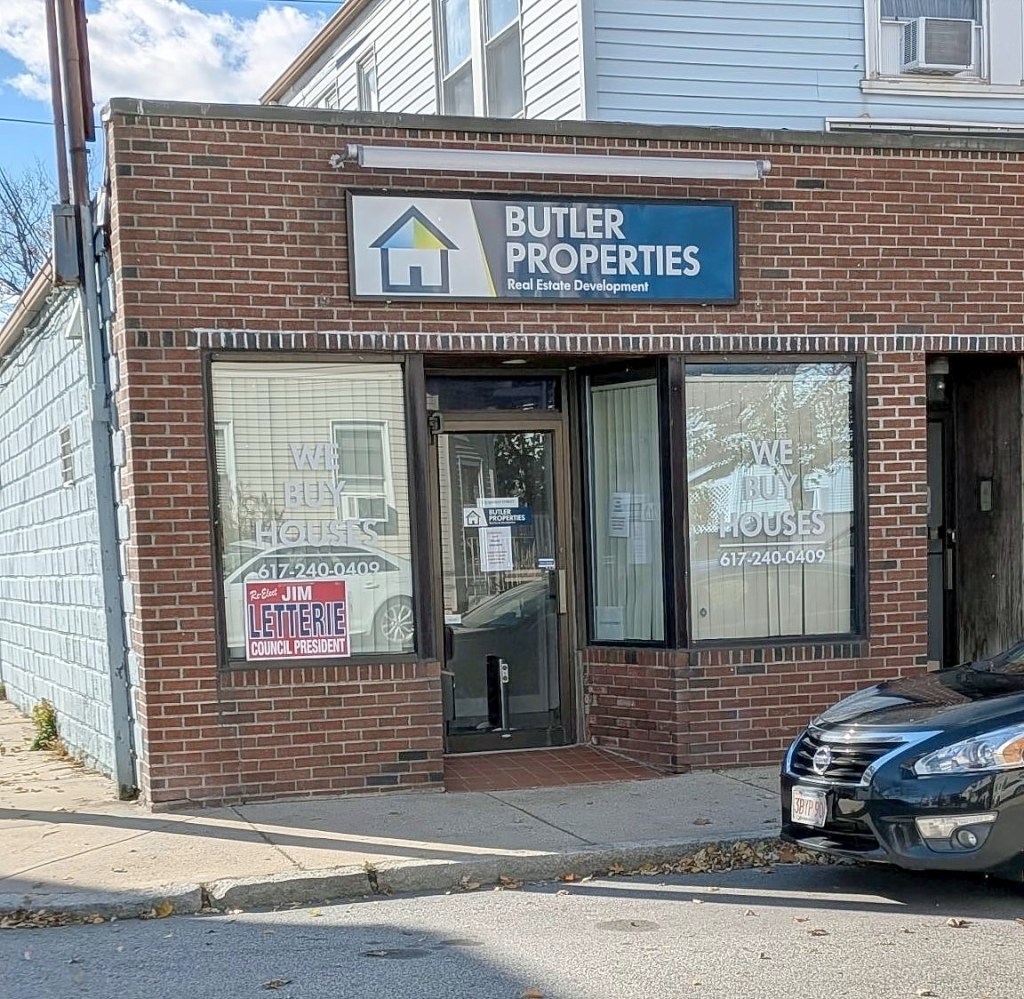
One potential example of the political tightrope that Mr Letterie referenced is the modest single-story brick building at 67 Woodside Avenue in Winthrop’s Center Business District. It’s the home of the former Letterie’s Italian Market, a humble eatery once known in town for the J. Figglesworth, Nuno Bettencourt and Southern Dandy chicken sandwiches. It was Mr Letterie’s longtime business, before his recent retirement. Mr Letterie owned the building from his purchase of it in 2002 for $199,000 to its sale this year for $635,000 – with a marketing pitch that it could be rebuilt into a “seven-unit residential building with a small commercial component.” The buyer subsequently was limited to four units, and is now planning to achieve that goal in the form of a new three-story building.
It’s one among many examples of significant development projects occurring in Winthrop regardless of whether the 3A law is observed or ignored in town. The construction projects involve both local and out-of-Winthrop investors. Some of them showed signs – including physical on-site campaign placards – of openly backing Mr Letterie and his anti-3A Town Council slate.
The major new development locations in town include the former Kirby Funeral Home building, sold in the past year for $1.85 million with plans for putting a 42-unit multi-residential building in its place. Also within Winthrop Center, plans are underway to build 20 residential units at 50 Somerset Avenue and 12 residential units at 63-69 Putnam Street. The second and third floors of the Wadsworth Building, at 214 Winthrop Street, are being turned into residential units.
Another new mixed-use residential building is under construction at 22-24 Pauline Street between the police and fire stations. A multi-family residential apartment building project recently was completed at 5 Fremont Street. A single-family home at 200 Main Street, with a three-quarter-acre lot, was purchased in 2024 for $1.2 million with plans to construct five townhouse-style condominiums.
Voter Mandate
In assessing the election results, Mr Letterie largely confined his claim of a voter mandate to the specific matter of fighting 3A, the state law that generally requires communities in eastern Massachusetts to expand zones where multifamily housing is allowed. Five years into the law, Winthrop is one of the few remaining towns still refusing to comply with it.
For months ahead of the election, Mr Letterie’s anti-3A allies repeatedly shouted down their critics at Town Council meetings and worked to oust unsupportive council members. Mr Letterie acknowledged that 3A wouldn’t actually require Winthrop to build or zone for new housing, because the town had drafted a plan for complying with 3A by rezoning to multifamily status parts of the town that already have large existing multifamily developments.
Yet he sided with the anti-3A perspective, endorsing their view that 3A compliance by Winthrop – smaller by population than most of the 177 communities affected by 3A – might lead state lawmakers to pass even tougher zoning laws in the future.
“It just leaves me with a bad taste in my mouth,” Mr Letterie said of the 3A law.
Winthrop voters clearly accepted that rationale for supporting Mr Letterie and his allies, said Cassie Witthaus of the community group Winthrop Working Together. But courts have made clear that state lawmakers hold authority over zoning, she said. And the Letterie team’s approach, Ms Witthaus said, threatens to leave Winthrop losing state aid, paying legal costs, and potentially getting a state-imposed zoning map that could actually permit more housing.
Signing Up
Winthrop voters “came out in droves because they were told we have the ability to fight the state,” said Ms Witthaus, a project director at a regional nonprofit affordable housing developer. “I’m not sure that they fully understood that they were signing up for loss of funding access for the new fire station, decreased services due to inadequate town income, and most immediately impactful: a cease in progress on flood mitigation planning for our most vulnerable homes.”
That concern was reflected at this week’s meeting of Winthrop’s Citizens Advisory Commission on Climate, where members discussed plans to compile a list of all homes in town vulnerable to rising sea levels and to ask the Town Council for a comprehensive plan for helping them after 3A-related reductions in state aid eligibility. “If we’re going to make recommendations to the Council, we need to know how many people are affected,” said Norman Hyett, a co-chair of the climate commission.
Winthrop also has one of the fastest-growing Hispanic populations in the entire state of Massachusetts, at a time of federal crackdowns on immigrants that have some non-native-born residents described as fearful of asserting their opinions and needs in public. While the town’s voting results do not offer demographic breakdowns, Mr Letterie said in his post-election interview on WCAT that the voter turnout – about 35 percent of registered voters in Winthrop – was a “really impressive” display of democratic participation.
“Winthrop is an inclusive community – it’s not unwelcoming to anybody,” he said. “But we like our town and we hope that everybody coming in enjoys the amenities that we have, and that quaintness that we have, and the camaraderie that we have, and the closeness that we have, we just want that to continue.”
“We just want to be in control and remain in control of our destiny,” he said, “and I think this vote tells us that the citizens agree with that.”
 Winthrop Pilot
Your input is welcome. We encourage respectful and constructive dialogue. Comments that contain hate speech, personal attacks, spam, or other inappropriate content will be removed. Repeat violations may result in a temporary or permanent ban from commenting.