
The president of the Winthrop Town Council, in its first full session since his inauguration to a new term, set out options for increasing fees or taxes on residents to help replace state aid blocked by the council’s refusal to obey the state’s 3A housing law.
The council president, Jim Letterie, offered the choices as a response to the town’s Citizens Advisory Commission on Climate, which warned that it sees limited ways of managing the town’s escalating flood threats while the town battles the state over the 3A matter.
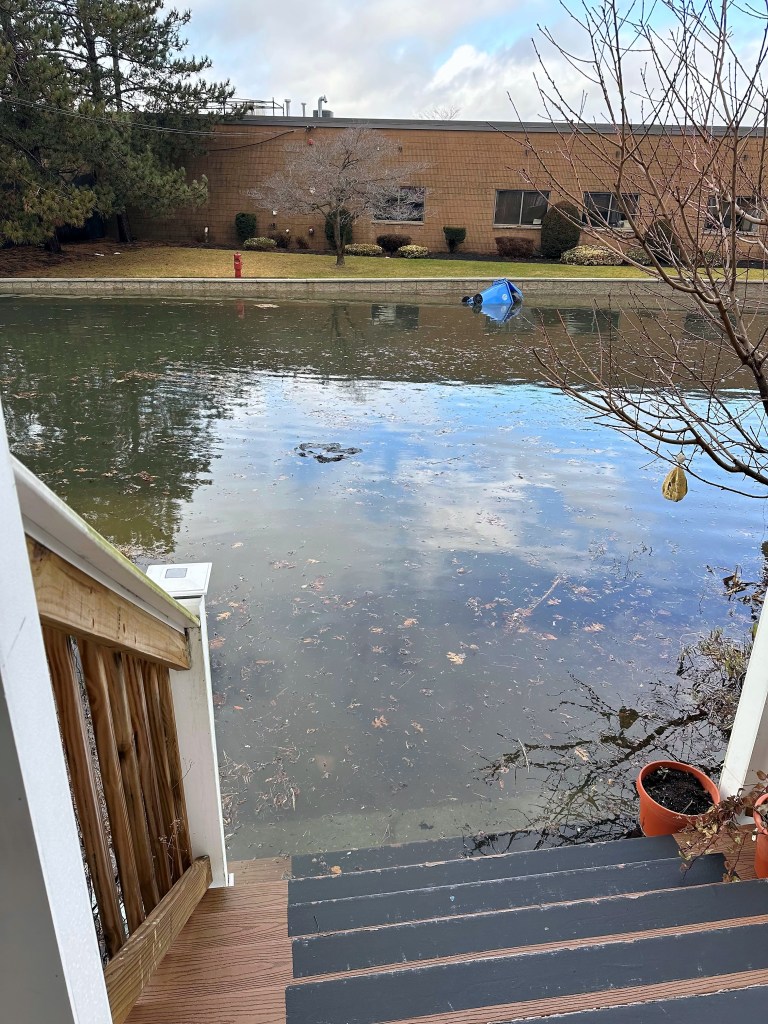
The council late last year approved spending $58,000 from town accounts on engineering work related to a proposed new stormwater system for the flood-prone Tileston-Girdlestone-Pico section of town. But the actual repair work in that area and nine other parts of town that regularly flood – just to fix clogged storm drains underneath streets, without yet building seawall structures that might also be necessary – was estimated by the Climate Commission to cost about $80 million, largely involving federal and state assistance.
Look at fees
Mr Letterie promised at Tuesday’s council meeting that he would try, in the fiscal 2027 budget, to include $5 million in town money for the repair work in the Tileston-Girdlestone-Pico neighborhood. But beyond that, he said, funding solutions likely would need to involve either raising water-sewer bill rates in Winthrop, creating a fee for the specific purpose of making storm-drain repairs, or asking voters to raise the amount of money the town borrows.
“We will look at all of that,” Mr Letterie told the council.
The new council won election in November largely by touting its opposition to complying with the 3A law, which requires most cities and towns around Boston to expand the zones where they permit multifamily housing. Winthrop could comply with 3A, without adding new housing, by shifting to multifamily status parts of the town that already have multifamily housing. But Mr Letterie has argued that the town will see greater value in confronting the state over the matter, and led a slate of council candidates that overwhelmingly won election in November on that stance.
Winthrop, however, has grown increasingly isolated on the topic. After court rulings upheld the state’s right to set 3A’s zoning requirements, only about a dozen of the 177 affected communities remain non-compliant, and the state has begun withholding some grant money from them.
Legal fights
The Massachusetts attorney general, Andrea Campbell, also has set the end of January as her deadline for initiating action against the towns that remain out of compliance. Such repercussions could include the state imposing its own preferred zoning map on such towns, or taking other legal action.
Before the council held its regular meeting Tuesday, it gathered for a closed-door session to discuss the possibility of fighting back on 3A by joining legal action against the state organized by Diana Viens, a daughter of the Town Council’s current vice president, Suzanne Swope. Then, in the public session, the council halted consideration of the matter after Kim Dimes, one of four newly elected council members, expressed uncertainty about their legal options.
The council also rejected, on a 4-4 tie vote, a proposal by Mr Letterie to appoint Debbie Chavis, an appointed member of other town panels, to fill the seat on the Board of Registrars of Voters left by the election of Paul Reardon to the Town Council.
Four council members – Ms Swope, Mr Reardon, Patrick Costigan and Joe Romano – opposed the Chavis nomination after Ms Swope unsuccessfully urged Mr Letterie to instead nominate her daughter, Ms Viens, for the Board of Registrars seat. Ms Swope did not acknowledge the family relationship or recuse herself from the vote.
Election integrity
Mr Reardon and Ms Viens were central characters in an effort this past year to oust another council member, Max Tassinari, over his support for compliance with the 3A law. Ms Viens led that recall effort and Mr Reardon signed her anti-Tassinari petition. He then voted, as chair of the Board of Registrars – in contradiction to direct state guidance and without acknowledging either the state advice or his personal support for the petition – in favor of her argument that the recall question should be placed on last November’s ballot, despite it collecting far fewer resident signatures than the town’s charter requires. State officials eventually blocked the recall question.
After Mr Letterie declined to nominate her daughter for Mr Reardon’s registrars seat, Ms Swope issued a broad warning about the integrity of Winthrop’s elections. She suggested a parallel to the national debate over the matter, in which some leading US conservatives have raised fears of voter fraud – despite the lack of supporting evidence – as a justification for making voting processes more difficult.
“I do hope that, since she wasn’t appointed,” Ms Swope said of Ms Viens, “that I do hope that our council takes very cautious (sic) and oversees this election process. Since we’ve had so many questions about it nationally, I just want to make sure that it’s done properly here.”
Mr Letterie pushed back, saying, “I have 100 percent confidence in the Board of Registrars that we’ve had, the town clerk, the running of all of the elections we’ve had – I think they have been impeccably run.”
Skin color
A chief ally of Ms Viens and her efforts both to repeal 3A and oust Mr Tassinari, Diane Sands, later appeared before the Town Council by video link, warning that Winthrop would lose its campaign to win an exemption from 3A requirements if the council did not back Ms Viens in her legal effort.
Ms Sands also rejected a previous suggestion to the council by another resident, Erin Barcellos, that some people living in Winthrop – including longtime residents – may fear federal immigration enforcement and don’t feel confident the town government will protect them.
“It’s the people that have to live day-to-day knowing they don’t know what is going to happen, because of shades of their skin, because of an accent they speak with, because of so many different things,” said Ms Barcellos, an organizer of weekly pro-immigrant demonstrations on the bridge between Winthrop and East Boston. In response, Ms Sands said that such fears may be based more on legal concerns. “I don’t think it’s so much shades of skin – shades of skin happen to go along with the illegality,” Ms Sands said.
Another Winthrop resident, Jack Dowd, told the council that participants in the bridge protest were risking being hit by an angry motorist. “Any time you have a crowd of people standing in one place, you’re going to have another system of people that really don’t like them standing in the same place every Saturday,” Mr Dowd said. “One person in one car could do a lot of damage to the people standing at that bridge – I wish they wouldn’t do it, for their own sake.”
 Winthrop Pilot
Your input is welcome. We encourage respectful and constructive dialogue. Comments that contain hate speech, personal attacks, spam, or other inappropriate content will be removed. Repeat violations may result in a temporary or permanent ban from commenting.