After a decisive loss in the Democratic primary to state Representative Jeffrey Turco, paramedic Lee Meyer is minimizing the possibility of another head-on campaign challenge, wary of a system he sees constructed by incumbents to protect their power regardless of policy positions.
One month after his nearly 2-1 loss to Mr Turco, Mr Meyer has returned to his two jobs in health-related fields, working to rebuild lost personal time. The political neophyte also is weighing his mistakes, taking cheer from measures of underdog accomplishment, and – through it all – wondering why an apparently key advantage in policy positions seemed to make such little difference.
“I got into this thinking that a lot of politicians are dishonest,” Mr Meyer said of his decision to give Mr Turco his first challenge since the incumbent gained the State House office in 2021. “But now I think it’s a lot more politicians are dishonest about their genuine stances.”
Expected vulnerability
The gripe reflected a central calculation of Mr Meyer and his backers: That Mr Turco holds the fundamental vulnerability of backing Donald Trump and multiple conservative causes, particularly those involving abortion and climate, and only won the 2021 Democratic primary with 36 percent of the vote due to the luck of getting a four-way contest that year against three relatively progressive opponents.
Despite the potential weakness that political background suggested for Mr Turco in a Winthrop-Revere district with a majority of Democratic voters, few if any elected Democrats backed Mr Meyer. Several major party figures – including state Senator Lydia Edwards and Governor Maura Healey – endorsed Mr Turco. Party leaders took such positions by “not exactly standing on the principles that they campaign on,” Mr Meyer suggested in a post-election interview.
Among experts, that perspective finds acknowledgement, but with varying degrees of surprise and explanations. “It’s rather shocking” that progressive Democrats such as Senator Edwards aligned with Mr Turco rather than Mr Meyer, said Rachael Cobb, an associate professor of political science and legal studies at Suffolk University.
“I think it’s more normal in Massachusetts” than in other states for loyalty to play such a strong factor in campaign alliances, Ms Cobb said. “But I cannot explain it.”
Enduring loyalty
Others, however, cite a series of reasons why unions such as Turco-Edwards, and many others, shouldn’t be so startling. They include: Incumbents face great risk in endorsing any challenger to an elected colleague, given the huge likelihoods of re-election; incumbents have common interests and abilities that unite them and discourage their challengers, especially untested ones; and incumbents whose districts share territory have particularly strong incentives to sustain cooperative working relationships.
And Massachusetts has developed a somewhat unique political system that the experts see as putting an exceptionally high priority on loyalty, for reasons that include a longer-than-average legislative season, and a history of government steeped in machine-style patronage.
“It’s hard to beat a party machine,” said Erin O’Brien, a professor of political science at the University of Massachusetts at Boston. “It can be done, but it’s hard to beat.”
“In Massachusetts,” said David Paleologos, the director of the Political Research Center at Suffolk University, “loyalty is a big deal, and this is sort of in our fiber.”
Admirable start
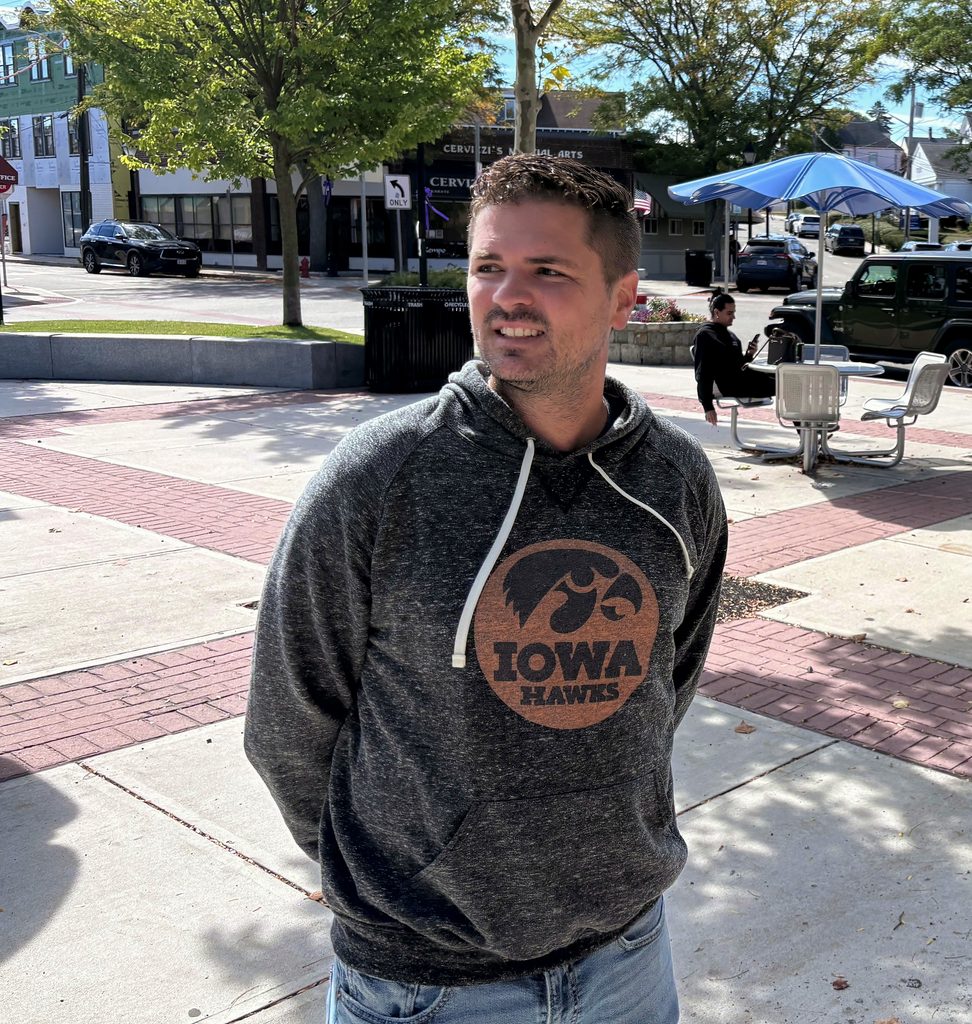
Through it all, Mr Meyer has been credited with faring well. He entered the campaign with virtually no experience or recognition, acting because he saw no alternative. “I felt obligated,” the Iowa native said, “being from a small town where it’s either, you’re going to do it, or no one else is.”
That inexperience meant a candidate who, over months of trying, netted only about $10,000 in donations – a fraction of the $300,000 that Mr Turco has accumulated over the years. “Everyone that I know is struggling – it’s not easy to donate to a small state race,” he lamented.
On the specific question of a possible re-match, Mr Meyer answered: “I don’t want to run again, at this point.” With no Republican in the race, Mr Turco’s win over Mr Meyer last month virtually guarantees his re-election next month.
Mr Meyer “really outperformed what I think a lot of people thought that he would do, especially given how much he was outspent,” said Jonathan Cohn, the policy director of the advocacy group Progressive Massachusetts. “Him doing as well as he did, with that much of a cash disadvantage, really does show that there’s a very strong base in the district that wants somebody who is not as out-of-step as Turco is.”
Senator Edwards shares at least parts of that assessment, saying that Mr Meyer “has a bright future” and is potentially worth endorsements for other races in the future. But, she said in an interview, Mr Meyer is fairly new to the area, offered prospective allies no political track record for judging his potential, and was not part of her 2024 campaign when Mr Turco endorsed her – a resident of East Boston – against a conservative challenger from Winthrop.
Winthrop realities
Ms Edwards said she encourages Mr Meyer to run again, perhaps at the Town Council level. Regarding his comments on the just-concluded race, however, Mr Meyer sounds like he might be feeling “a little entitled to a lot of my work,” she said. To the degree that incumbencies can create unfair advantages, Ms Edwards said she supports term limits and ranked-choice voting.
For his campaign, Mr Meyer focused on three main issues: The availability of health care, the cost of living, and transparency in government. He argued that his job as a paramedic put him in a unique position to repeatedly see the costs to society of failed health care policies, especially those involving restrictions on reproductive health care. He described the inspiration of seeing Ms Edwards repeatedly and emotionally describe abortion rights – a matter where Mr Turco repeatedly talks and votes in opposition – as a question that should be beyond debate in politics and society.
“People have these core issues that they say are non-negotiable,” Mr Meyer said. “And then it turns out they’re quite easily negotiated away.”
Ms Edwards submitted an alternate explanation for the politics that Mr Meyer encountered in Winthrop, which has a voting population that’s majority Democratic and yet keeps electing politicians with conservative orientations. It’s possible, the senator said, that “the reality is: Jeff and I represent more of Winthrop than maybe some people would like to acknowledge.”