
Winthrop has seen a sluggish rise in voter registration, reflecting a series of factors that experts see as including the lack of national races on this year’s ballot, concerted disenfranchisement efforts, and difficult registration timelines.
Changes in state law over the past 10 years have made it easier to pre-register young voters, register online, and automatically register driver license holders, said Geoff Foster, the statewide executive director at Common Cause, a nonpartisan pro-democracy activist group.
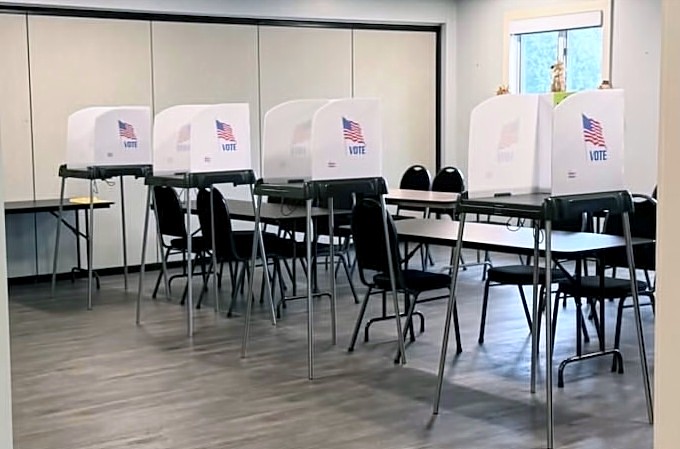
But Massachusetts also has a serious barrier to voting in the form of a state law that ends voter registration 10 days before an election, Mr Foster said in an interview.
Twenty-two US states allow election-day registration, Mr Foster said. The 10-day cutoff in Massachusetts seems arbitrary, he said, and it left some 3,000 intended voters ineligible to participate in the 2024 presidential elections. Most of those 3,000 people assumed they were registered or didn’t know about the 10-day deadline, Mr Foster said.
Gains slow
The town of Winthrop recorded a net gain of 267 additional voters between April and a report in mid-August, the town reported recently. That’s down from 490 net new voters during the same period last year, the town said. State figures show that Winthrop had 14,326 voters as of February this year, up one half of a percent from 14,247 voters in Winthrop in February 2024.
The election in Winthrop and many other Massachusetts cities and towns is scheduled for November 4, with early voting already completed in Winthrop.
Potential voters face a barrage of efforts to discourage or prevent them from voting, especially in towns such as Winthrop with fast-rising Hispanic populations, said Celia Canavan, the executive director of the League of Women Voters of Massachusetts,
“Faith in election is a huge one,” Ms Canavan said of the reasons for stagnant voter growth. “The talking point of, ‘elections aren’t trustworthy,’ or, ‘your voting doesn’t matter’ – I think it’s working on a lot of people.”
One major setback for voting rights occurred in August when the federal government barred nongovernmental groups, including the League of Women Voters, from registering new voters at naturalization ceremonies, Ms Canavan said. For some LWV chapters in the US, those new-citizen gatherings have provided the majority of the annual growth they help produce in voter registration, she said.
Immigrant backlash
“Federally, we’re seeing backlash on immigrant communities right now – and everything trickles back down to local,” Ms Canavan said. “Local is where we see the battleground.”
One common tactic among political actors who feel they benefit from fewer voters, Mr Foster said, involves raising claims of voter fraud – a fear that is often highlighted despite being very rare. Those false claims are often accompanied by demands that voters show personal identification at voting stations – a policy that experts including Mr Foster and Ms Canavan describe as far more likely to disenfranchise voters than reduce any fraud because fraud is so uncommon.
Both of those efforts can now be seen in Winthrop, where the leader of a small group of citizens fighting town compliance with the state’s 3A housing law has begun complaining about “unusually high” voter registration levels – despite the town data showing that new registration numbers in Winthrop are lower than they were last year. The anti-3A activist, Diana Viens, offered in a social media posting to share with her allies the names of new voters in Winthrop so that those names could be investigated. Members of the anti-3A coalition in Winthrop also have been collecting signatures around town seeking to advance the idea of mandatory ID use at polling stations.
Ms Canavan said the League of Women Voters has no details on any efforts by activists in Winthrop to investigate the backgrounds of new voters, but said such behavior is not uncommon in Massachusetts. In her experience, she said, the strategies are discussed within private Facebook groups – an indication the participants are not willing for their tactics to be widely understood.
“This is definitely an attitude we’ve been seeing throughout the state,” she said.

 Winthrop Pilot
Your input is welcome. We encourage respectful and constructive dialogue. Comments that contain hate speech, personal attacks, spam, or other inappropriate content will be removed. Repeat violations may result in a temporary or permanent ban from commenting.