
The town of Winthrop has lost $100,000 in state grant money for planting new trees, due to the town’s non-compliance with the 3A state housing law, in the latest of several setbacks for both state aid to Winthrop and local greening efforts.
State officials late last month announced nearly $632,000 in tree-planting grants through their Cooling Corridors program, with beneficiaries that include Boston, East Boston, and a Medford-Melrose collaboration.
Winthrop had asked in its application for as much as $150,000, and town officials said they were told by their state counterparts that they probably would have won $100,000 if not made ineligible by the 3A situation. State officials didn’t confirm that number but acknowledged the strength of the Winthrop application.
“The Town of Winthrop’s Cooling Corridors application was ranked 8 out of 18 applications, and most likely would have been funded if the town was compliant with the law,” Hilary Dimino, tree planting program manager at the Massachusetts Executive Office of Energy and Environmental Affairs, said in a letter to the town explaining the outcome.
State attention
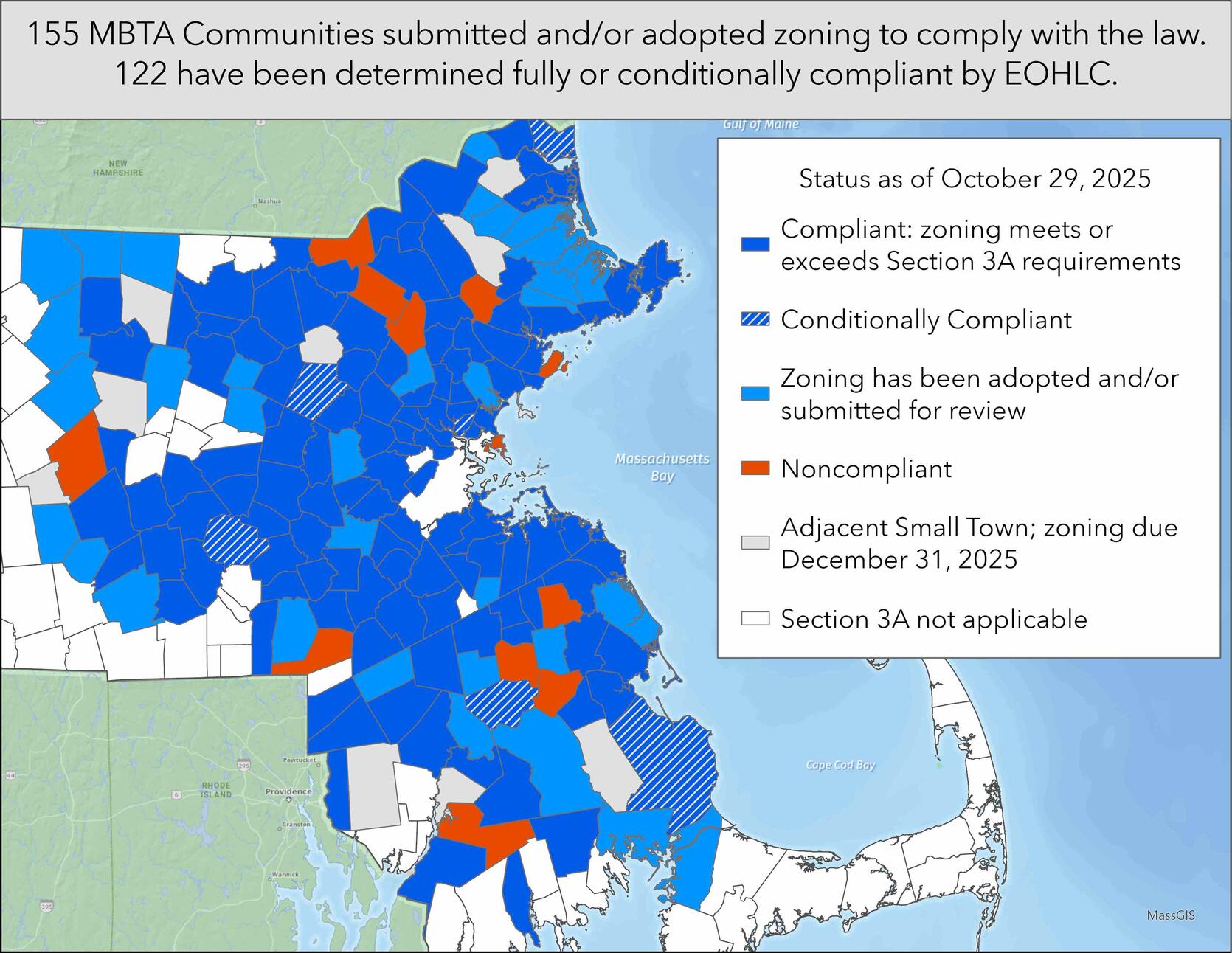
The 3A law requires most cities and towns in eastern Massachusetts to add some areas where multifamily housing is allowed by zoning, ideally near train stations or bus stops. The penalties for non-compliance include a loss of eligibility for multiple categories of state grants.
Winthrop officials have confirmed they could comply with 3A by rezoning to multifamily status parts of the town that already have large existing multifamily developments, without adding any new housing. But Winthrop’s Town Council president, Jim Letterie, a Republican, this month led to an overwhelming victory in Democrat-majority Winthrop a slate of Town Council candidates who emphasized their firm and collective anti-3A stance as a way of demonstrating their opposition to the state’s court-affirmed authority over zoning policy.
Mr Letterie, in a post-election appearance on the WCAT program Winthrop and the World, reiterated his confidence that the state eventually will relent in its current enforcement of 3A against Winthrop – even though most affected communities have now complied and he conceded that lawmakers aren’t taking any steps toward revising the law.
“There has not” been movement in the legislature to reverse 3A, Mr Letterie acknowledged. That, however, should change, he said. “I think you’re going to have to see more state legislators look after their cities and towns that they’re representing, and maybe go to bat a little bit stronger for them,” Mr Letterie said.
Planting pushback
The denial of the tree grant application nevertheless adds to a series of instances – including flood protection efforts – where Winthrop has been left out of state grant programs because of its 3A position. It also follows several other local obstacles to the protection and growth of the town’s tree canopy, including resistance to proposed tree plantings near the high school and damage to a tree at the library during a ramp construction.
Winthrop’s trees face heavy environmental and human stresses, and they don’t get the corresponding amount of support that they need from residents and others in town, said Tom Derderian, a University of Massachusetts-trained arboriculture expert appointed last year as Winthrop’s tree warden.
“The big old trees around town grew up in a world that was much more benign than our current world,” Mr Derderian said. “There’s more air pollution, there’s more heat, there’s more road salt, there are more trucks banging against their branches, and cars and trucks running into the trunks of these trees.”
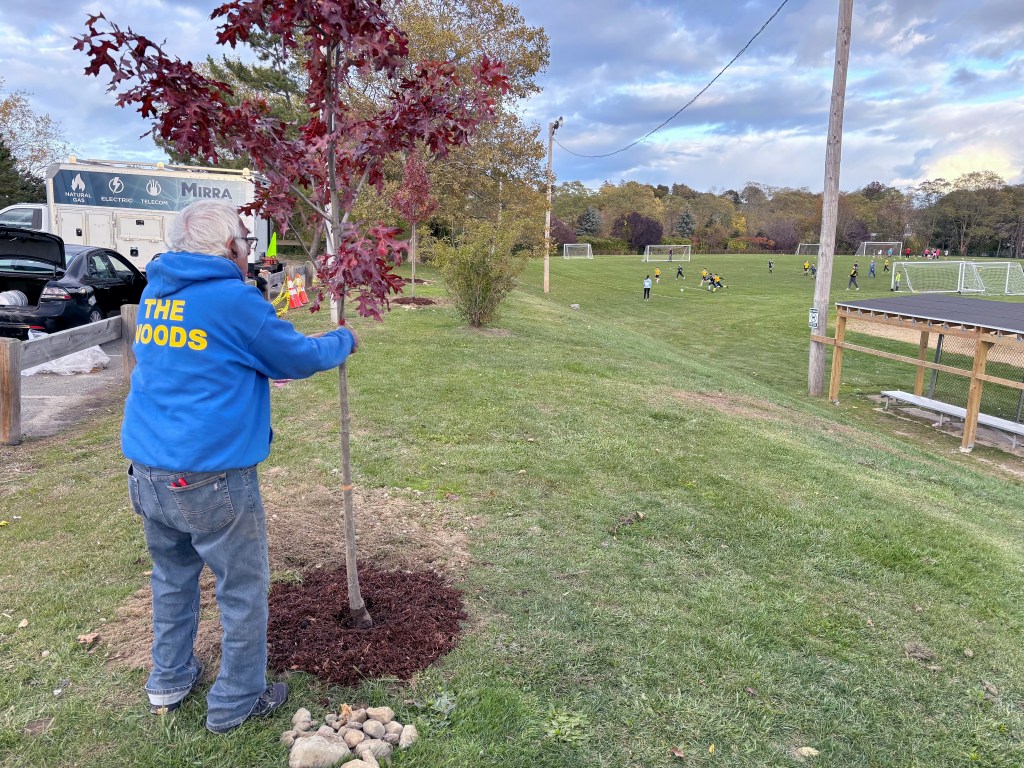
The town – and Mr Derderian personally – have been planting new trees around town, including a few dozen in recent weeks in areas that include Fort Banks Field and Fort Heath Park. But School Department leaders pushed back against his suggestion to plant trees around the athletic field next to the middle and high school building. And this year, Mr Derderian said he has confronted problems that include residents cutting trees without permission and the library ramp installation crew failing to protect a large nearby tree as the work plan required.
Fear of trees
A central theme, Mr Derderian said, is that people in Winthrop want trees, but don’t necessarily want to negotiate possible complications.
“There’s a lot of fear of trees,” he said, citing concerns heard from residents that trees might interfere with their pipes, and drop branches and leaves. “Everyone seems to like trees – but maybe somewhere else,” he said.
The problem with that approach, Mr Derderian said, is that trees take decades to grow and to provide the shade that people need, especially in a warming climate. And right now, he said, Winthrop is “losing tree cover rapidly,” by cutting down bigger older trees and not replacing them fast enough. “It’s not a one-for-one replacement,” given that not all newly planted trees survive, he said.
The town currently budgets about $25,000 a year for new trees, and it already has spent that amount less than halfway through the town’s fiscal year, Mr Derderian said. Without the state money, Mr Derderian said he feels no other option than to go around town hunting for donations.
“My mission,” he said, “is going to be trying to beg people in town for money for trees.”

 Winthrop Pilot
Leave a reply to tomcfarland Cancel reply