The Winthrop Town Council unanimously voted to end the town’s authority to set prices for Winthrop taxi, after a routine request for a rate hike led the council to more fundamentally question the wisdom of its fare-setting role.
The council voted 8-0 last week to end the town’s right to set the company’s rates for its in-town trips, as allowed by state law, as members agreed that online ride services such as Uber and Lyft have made the town’s role seem obsolete.
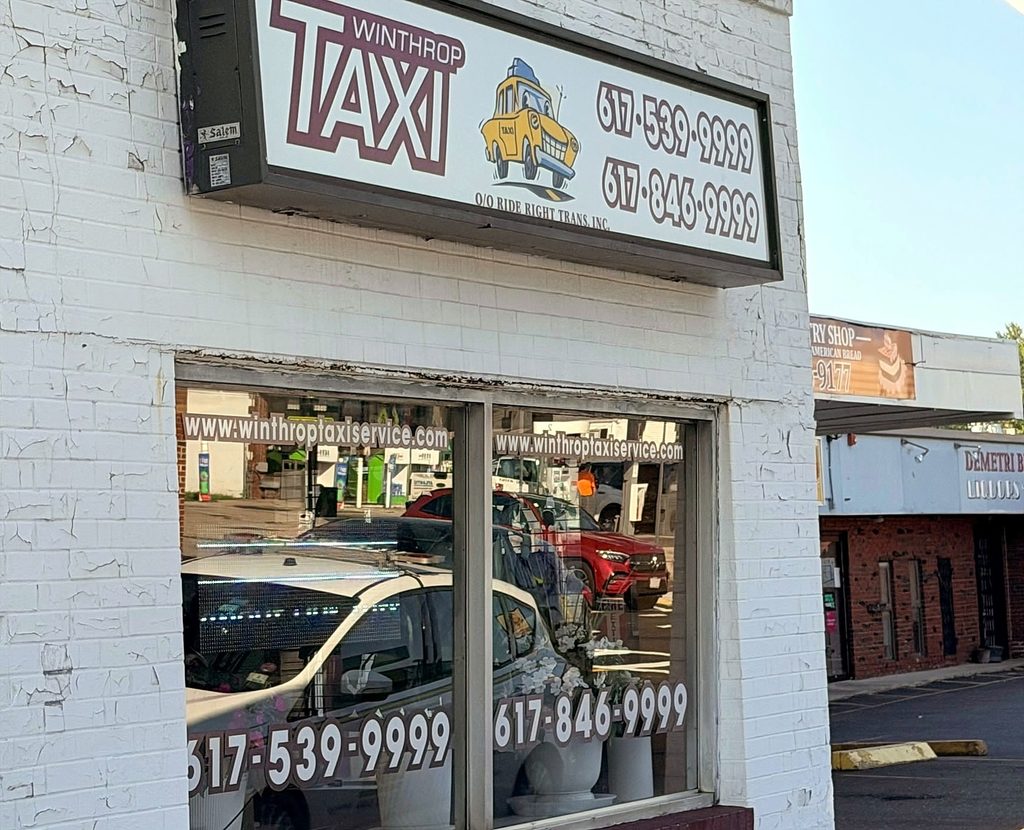
“The time now has come for the legislative body of the town to be out of the taxi fare business,” the council’s president, Jim Letterie, said in pushing for the vote one month after the council voted on a 6-3 tally to let the taxi company increase its base fare from $8 to $10.
Town limits
The head of the taxi company, Shawn Cluen, said after the Sept. 8 vote that he welcomed the council’s retreat from its fare-setting role, and declared that he has no plans to increase the fares again or to implement an annual increase. State law still lets his company set fares for rides that cross the town’s borders, such as runs to Logan airport that typically cost $28 per trip.
Mr Cluen also acknowledged concerns about the affordability implications for seniors in Winthrop – a central concern in the council’s debates over its fare-setting duty – but said his company probably could not be more helpful to seniors without some type of subsidy from the town.
The company does hope to “run a daily special” or an “outing day” discount for seniors, and it has tried talking with town officials about the possibility of a more general senior discount, Mr Cluen said.
But Mr Letterie has spoken skeptically of the idea that the town might subsidize Winthrop Taxi fares, given that seniors appear to make up about 85 percent of the company’s ridership.
Cost challenges
“Are we really going to be subsidizing Winthrop Taxi for 20 percent of 85 percent of their rides?” the Town Council president said last month in an appearance on the WCAT program Winthrop and the World.
The $2 fare increase approved last month by the Town Council was essential for the taxi company to stay in business in Winthrop, Mr Cluen told the council at its Aug. 4 meeting.
Between rises in the cost of living, especially gasoline, and a 29 percent increase in private car insurance, the job of keeping Winthrop Taxi open and maintaining its current drivers — Mr Cluen has lost three recently — will be “an uphill battle and it’s only going to get harder,” Mr Cluen said at last month’s council meeting.
The online ride companies Uber and Lyft also have caused taxi ridership to drop significantly, said Mr Cluen, who also owns Ride Right Transportation in Revere. A Winthrop Taxi driver currently has an average of about eight to 12 customers per day, down from 30 rides per day in 2014, he said.
Maintenance costs
Mr Cluen also complained about the effects of ongoing road construction in town, which he described as requiring “constant maintenance” on the company’s eight taxi vehicles. Mr Cluen said the company replaced 122 tires on the taxis last year, and blamed that on the construction. Mr Cluen also is in the process of buying new cars for Winthrop Taxi.
One month into the fare increase, Mr Cluen said it was “soon to to tell” how the increase has affected business or driver tips. The previous fare increase approved by the Town Council, a one-dollar increase in 2024, “was very disheartening to the staff,” especially since the drivers pay for their own gas, Mr Cluen said.
Mr Letterie, in leading the call for the town to stop setting Winthrop Taxi’s in-town fares, repeatedly described the impossibility of doing that kind of work without knowing the private details of the company’s financial situation.
But he said that kind of investigative work didn’t seem necessary anyway, since market competition would suffice for keeping Winthrop Taxi’s in-town fares reasonable. His fellow council members largely agreed, though several residents pleaded otherwise, fearing harm to residents in general and seniors in particular.
Senior sympathies
“Without any kind of supervision from either the town or another body,” John Morgan, a member of the Winthrop Commission on Disabilities, who is also blind, told the Town Council last week, “it opens the door for the taxi company just to increase their rates at their own will.”
Council members said they sympathized with the concern but didn’t see it a sufficient reason to continue setting taxi fares. One council member, Joe Romano, noted that the town doesn’t limit the costs of Uber or Lyft. “I don’t really think that’s fair, in the spirit of capitalism, that we can only choose to restrict the pricing of one of these companies,” Mr Romano said. “We don’t do this for any other industries in town, as far as I know.”
Mr Cluen first asked the Town Council to stop setting the fare six years ago, with the same basic argument. “It’s about time” this decision was made, given the lack of similar treatment of other businesses in town, he said.
Massachusetts state law has long allowed municipalities to set taxi fares as a means of protecting customers. Private taxi companies in 2014 formed an association to guard against the ability of Uber and Lyft to set their own prices, and the city of Boston formed a similar group, but they stopped meeting soon afterward.
