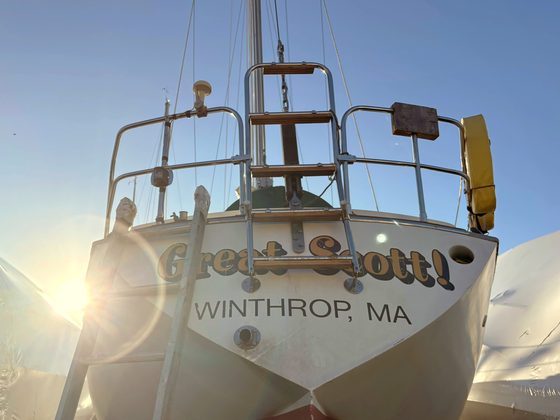
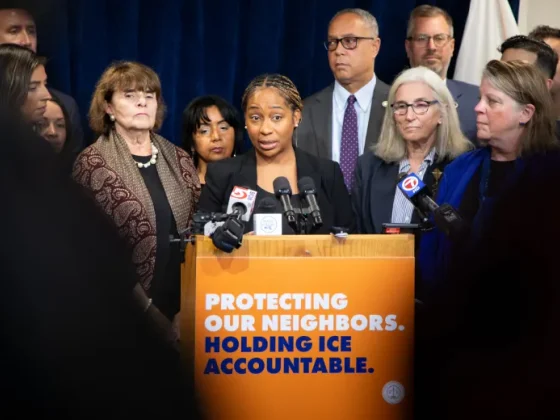
The Winthrop Town Council is taking steps toward another professional study of parking and transportation in town as it seeks new data for its fierce and persistent arguments over how many people and how much business activity the shrinking community truly wants to attract.
The council has sought the parking-focused study at a moment of possible transition, in both housing and transportation, in which the town’s governing body is edging toward some form of belated acceptance of the state’s 3A housing law, while raising emotional new battles over housing in the center of town and the right to decide such questions.
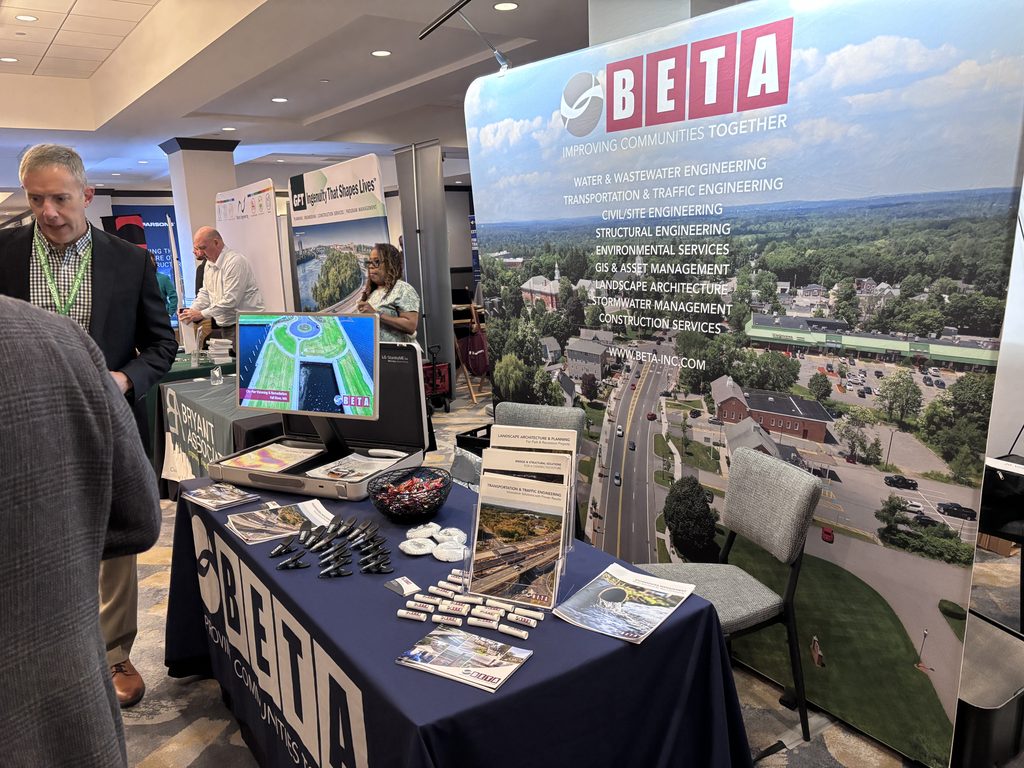
In that environment, the study requested by the Town Council seeks a private consulting firm that will “conduct a comprehensive, town-wide parking and traffic study” covering such topics as parking availability, meters, one-way streets, enforcement, and business effects.
The language of the study request allows for a fairly open-ended set of responses, said Winthrop’s Town Council president, Jim Letterie. “There’s no preconceived notions about what we’re going to get,” he said.
Resident goals
Fundamentally for Winthrop, Mr Letterie acknowledged, are questions of whether and how much the town – which has shown consistent annual declines in population and jobs, and struggles with ideas for making itself more attractive to outsiders and growth and younger people – genuinely wants to stay on that pathway.
The ongoing pursuit by Town Council members of new housing limits in the Central Business District has become the leading example at the moment. Other struggles include the ongoing discussions about whether the town’s biggest beach, Yirrell, should have easier access by private car and whether the town’s ferry service to Boston should be expanded to invite more outside visitors.
The overall attitude of residents toward such growth seems unclear, Mr Letterie acknowledged. “I’m not prejudging,” he said of various ideas for making Winthrop and its waterfronts more inviting. “But do people want people from other cities and towns to come here to enjoy the beaches?”
Mr Letterie spoke shortly after a five-member faction of the nine-member Town Council used his absence for a family wedding to push a plan that would lower building heights and sidestep per-unit parking requirements in the town’s Central Business District – and impose such anti-growth perspectives by giving the Town Council the town Planning Board’s authority over granting project proposals in the area.
Five bidders
The town’s request for the parking study attracted five bidders, with bids ranging from $138,000 from BETA Group, to nearly $440,000 from Benesch. Some council members have suggested that the body would choose the lowest-priced offer if it chooses any of them, although the study request stated that bid price will account for only 20 percent of the ultimate decision. The town said that the firm’s experience and its proposed approach each would be higher-rated factors in the selection decision.
Either way, past results suggest some tempered expectations for any outcome. A 2017 study of the Central Business District did help Winthrop win state money for water and sewer work, though the study’s call to redevelop the former Middle School site languished before being chosen for a new fire station, and the plan’s proposed road closure and parking-space reduction was abandoned under public pressure. Safety-related suggestions in a 2021 study of the intersection of Pleasant Street and Main Street were largely ignored.
Such outcomes, experts have said, generally reflect a society in which private car use is so subsidized and required by governmental design that many Americans – with a nationwide average of eight parking spaces for every car – don’t substantially debate overall costs and inequities and instead lean toward solutions that involve even more public funding and regulatory compulsion of private motoring.
Parking is a prime example, said Jason Schrieber, a senior principal at the engineering and design firm Stantec. “Ninety-plus percent of all parking spaces in America are free, but not one of them is actually free,” since the cost of the land and its use is covered by others, Mr Schrieber said.
Public perceptions
The most recent formal analysis of the question in Winthrop was the town’s 2017 study, led by the architecture and design firm Form + Place, which reported a strong existing supply of spaces for private car parking in the Central Business District. “Despite the public perception that parking is unavailable, particularly in high‐visibility areas like French Square, field observations found that only 48 percent of on‐street parking spaces and 35 percent of parking spaces in municipal lots were occupied,” the 2017 study said.
That’s similar across the Boston area, the Metropolitan Area Planning Council found in a 2019 survey. It showed nearly 30 percent of the parking spaces in 14 measured communities sitting empty at periods of peak demand. That wasted about 41 acres of land across nearly 200 multifamily developments, adding about $95 million in construction costs or about $5,000 per housing unit, the MAPC said.
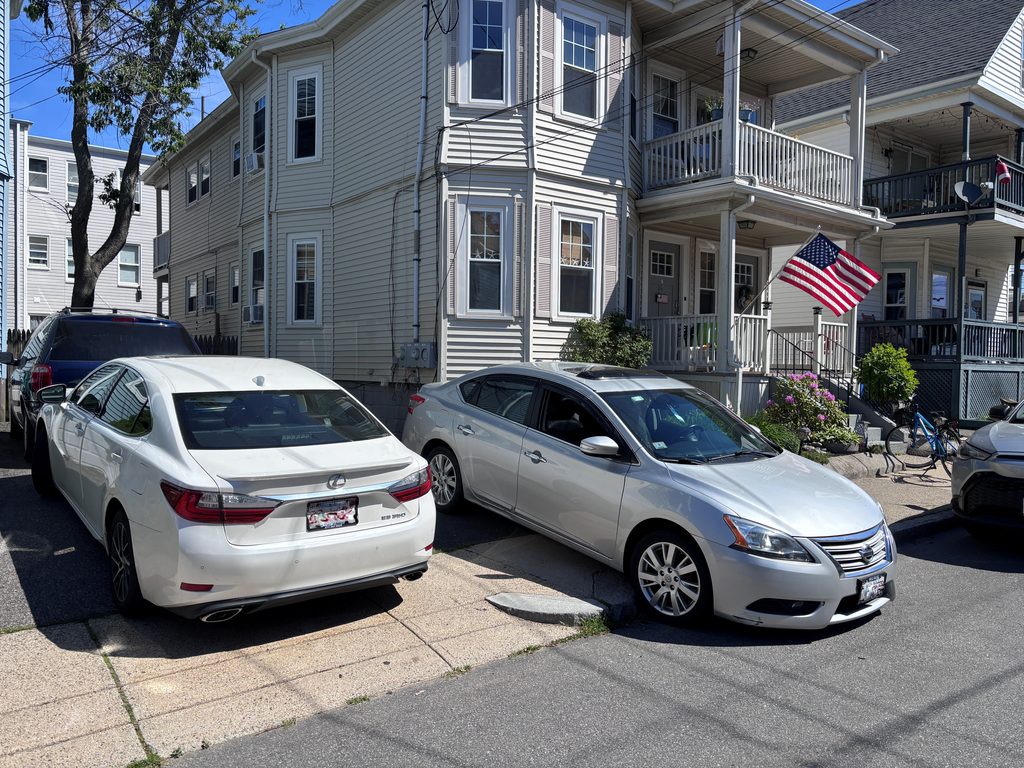
“If that is something that Winthrop is worried about,” Mr Schrieber said of parking needs, “typically the data suggests that most of our existing policies are very conservative” in providing parking availability, he said.
The politics, however, seem entrenched. Mr Letterie noted that people from Winthrop expect to walk to their final destinations if they take a car into a place like Boston, yet won’t tolerate any substantial walk in their own hometown. “Here,” he said, “it’s not OK.”
Costs overlooked
Part of that assessment involves Mr Letterie’s own sense that the town spends little or nothing to allow private cars space on town-owned and town-maintained land. “It’s not costing any more to have the street 10 feet wider” to accommodate car parking, Mr Letterie said, “except the cost of the pavement.”
Studies of such questions, however, show the actual costs as substantial. Harvard University researchers in 2019 calculated that every Massachusetts family spends $14,000 a year subsidizing private car use, regardless of whether or how much they use one. Private motorists, while paying large fees that include gasoline and excise taxes, still cover less than half of the value they receive and the costs they generate, the study found. That lost value, the Harvard study said, includes more than $4 billion worth of land set aside for parking.
Massachusetts state officials, in a February 2025 report on housing challenges, also recommended eliminating parking minimums statewide for any residential use, saying that would reduce construction costs by $10,000 to $50,000 per unit, while creating environmental and community benefits such as parks and other open space. “Excess parking has real consequences,” including increasing congestion and pollution, and reducing housing availability, the MAPC said in its 2019 report.
Some communities have responded. Cambridge, Somerville and Salem all acted within the past few years to eliminate their requirements on developers to supply parking spaces, and Boston’s City Council voted 9-4 this month to join them. Across the US, at least 124 communities have ended parking minimums for housing developments, with most of that happening in the past four years, according to the Parking Reform Network, an association of municipal officials and researchers that estimates such mandates add an average of about $225 per month to rental costs.
Overbuilt parking
Salem acted after a study showed that only about 70 percent of the city’s downtown parking was used at peak periods, even as residents were complaining about its perceived unavailability, said Jonathan Berk, a member of the Planning Board in Salem and chair of the board of Abundant Housing MA.
It was “a worthy approach,” Mr Berk said of Salem’s study, “especially to get a fair and accurate understanding” of a community’s parking and its economic implications.
Winthrop requires developers in the central part of town to provide 0.75 car parking spaces for every one-bedroom unit they build, and 1.25 spaces for every two-bedroom unit. As part of their battle with Mr Letterie, a five-member faction of the nine-member Town Council has pushed a plan for the central area of town that would end the right of developers to escape the parking requirement by paying a $20,000 per space exemption fee, lower the building height limit, and end the town Planning Board’s authority over handling such cases.
The Planning Board’s chair, Christopher Boyce, a real estate developer, call the ideas misguided, saying that downtown Winthrop is growing in a way that supports local businesses, and that no developer has ever used the parking buyout provision. “After more than a decade of this zoning being in place, we are only now beginning to see the housing and investment it was intended to encourage,” he said in a social media posting.
Study motive
In Winthrop, however, some Town Council members calling for the new study have said they hope it will encourage the town – once extensively served by rail – to find even more parking capacity. The council’s vice president, Suzanne Swope, said Winthrop’s parking shortage is so severe that the town should allow no exceptions from residential parking requirements. “Bottom line: We don’t have enough parking for the cars we have,” Ms Swope said. “So, we got to figure it out.”
Mr Letterie, while questioning the financial stakes, does not agree that Winthrop generally needs more parking. “I think there’s enough” parking in town, he said. “I never think it’s as bad as sometimes people say,” he said.
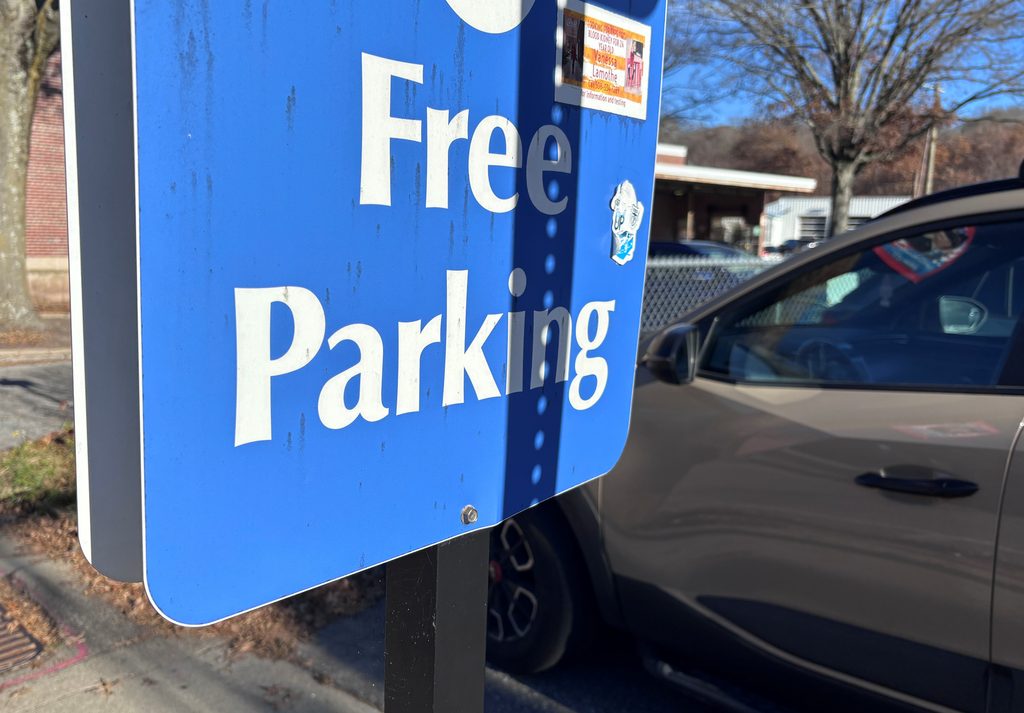
One likely future direction, Mr Letterie said, is that the town will soon enact some increase in the fee – $5 – that the town charges for the right to park a private vehicle on public roadway for an entire year.
Any hike, however, is likely to be fairly limited and – as is the case in pretty much every community – not likely to pay the town back for the actual value of its land and its ongoing maintenance.
Parking permits
That kind of restraint, Mr Letterie said, reflects his understanding of state law. Eric Bourassa, the director of the Transportation Division at the Metropolitan Area Planning Council, explained Mr Letterie’s perspective by saying that Massachusetts communities are subject to a decades-old state court ruling that’s been interpreted to mean that communities cannot price residential parking permits beyond “clearly direct costs” such as the printing and distributing of stickers, as well as police enforcement of compliance.
Mr Schrieber disagrees. Stantec’s attorneys have come across such legal interpretations, he said, and they understand it to be “a misperception” of state restrictions on excess taxation, which actually allow a broad understanding of land value and other costs associated with parking private vehicles on public property.
Either way, the debate over such policies in Winthrop touches wider questions of identity. The 2017 study on the Central Business District led by Form + Place noted that Winthrop had only 1,800 local jobs, down more than 40 percent from nearly 3,000 such jobs in 1990, reflecting a growing habit of residents finding their needs outside the town. The study said Winthrop was the only seaside community in Massachusetts with a declining population, and it called the job losses “directly opposite other comparison waterfront communities.”
The town also has had a relatively fast-aging population, with 31 percent of residents 55 years of age or older, the 2017 report said. At the same time, people under age 50 are much more likely to prioritize a short commute to work, with nearly half of Millennials calling it a “very important” factor in deciding where to live, the National Association of Realtors said in a 2023 report. Gen Z and Millennials “prioritize proximity to public transit more highly than closeness to the highway,” the association said.
Perpetual jams
Yet when state officials required of Winthrop one partial bike lane, about a half-mile-long, as a condition for more than $6 million in state funding for the reconstruction of Revere Street, local leaders resisted, creating a pathway with repeated interruptions. A similar question is coming for the planned rebuilding of Main Street from Revere Street to Pleasant Street. One possibility, Mr Letterie said, is that the town will ask for the bike lane portion of that project to run along Morton Street rather than down Main Street.
Winthrop, without a market-based system for pricing public road use, faces such questions even as town officials acknowledge that current levels of car use exceed the community’s capacity to fit the vehicles. One result, the town’s director of public works, Steven Calla, told the Town Council, is that Winthrop’s roads simply are not wide enough for all the parking that is allowed on them.
“It’s easily 25 percent to 30 percent of our roadways in town don’t meet the requirements of two-way traffic with parking,” Mr Calla told the Town Council as it considered topics for the parking study.
The town began to address that recently in one instance by making Court Road a one-way street. Some other two-way streets in Winthrop may also become one-way streets, Mr Letterie said. But the extensive overcrowding problem cited by Mr Calla is destined to persist, the Town Council president said. “I don’t necessarily think we need to fix every street like that,” he said.