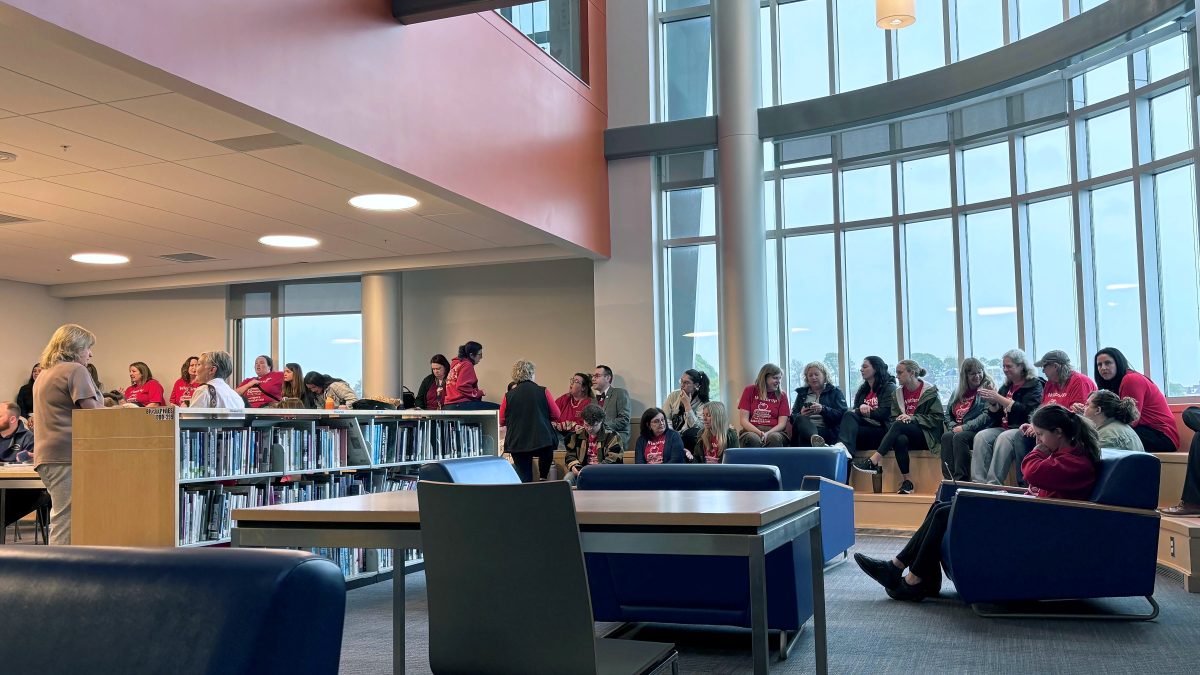
After a year of talks, the Winthrop School Committee and the union representing its teachers reached a tentative agreement on a new three-year contract offering annual average raises of about 3 percent.
The settlement came Wednesday evening at the second of two final sets of talks to wrap up remaining issues after the School Committee threatened to seek state intervention in the matter.
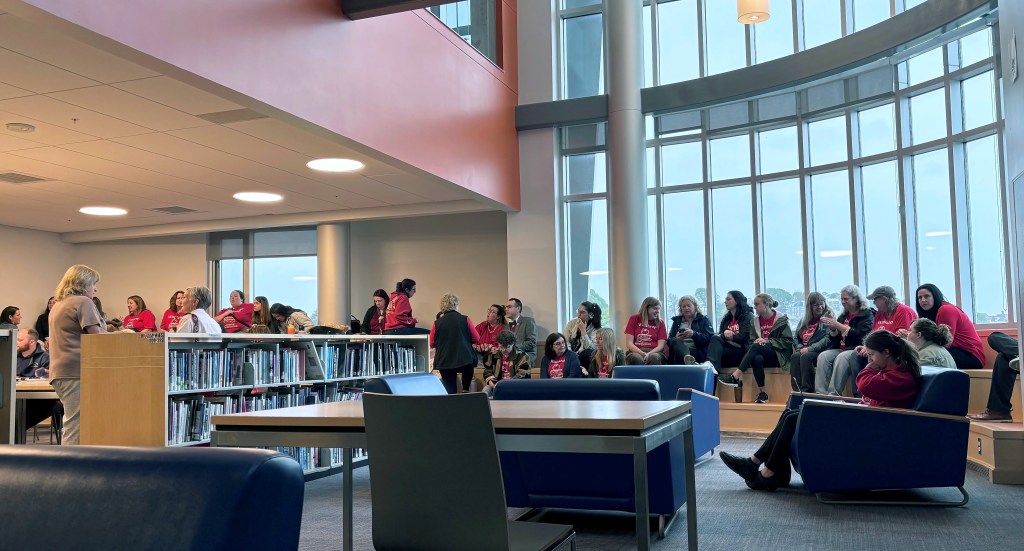
While some teachers and parents grew critical of the School Committee’s approach in the waning days, the committee said its flexibility was limited by town budgetary constraints. In the end, leaders of the 250-member Winthrop Teachers Association expressed both relief for the agreement and concern for the system going forward.
Extended negotiations
“This has been such a long difficult and emotional process, but the results are something that we are all proud of,” the union’s vice president, John Cross, a life skills teacher at the high school, said in a video presentation to members that was posted to social media.
The chair of the Winthrop School Committee, Layne Petrie, issued a statement thanking all participating parties for their efforts on behalf of the children and the community. “The time, professionalism, thoughtfulness and dedication of the negotiating subcommittees and the WTA bargaining teams were unmatched,” Ms Petrie said.
The tentative contract agreement between the town and the union involves all four of the association’s bargaining units – representing Winthrop’s teachers, specialized needs teaching assistants, secretaries and nurses. The pact is retroactive to the start of the current school year, and members will be asked in the coming days for a vote to ratify it, said the union’s president, Brian Donnelly.
The talks began last May, aimed at drafting a new three-year agreement to replace the contract that expired last summer and had provided annual pay increases of about 2 percent. The new agreement offers “the largest wage increases for our members in a generation,” Mr Cross said.
Financial boundaries
Town officials described their position as relatively constrained, given factors that include statewide limits on tax increases, Winthrop’s relatively limited commercial base, and the dominant share of town spending that goes to schools – the schools account for more than $40 million of the town’s $68 million annual budget, with salaries representing nearly three-quarters of that school allocation.
The Town Council president, Jim Letterie, suggested in November that Winthrop teachers shouldn’t necessarily expect pay comparable to that of neighboring towns. Yet the talks generally moved along with limited outward expressions of friction until last month, when the School Committee spoke of seeking the state mediation, and some teachers publicly accused the committee of negotiation tactics and delays that would hurt students and the community.
The instructors included Cara Ripley, a specialized needs teaching assistant, or ESP, at Winthrop’s middle school, who told the School Committee at its April 27 session that its actions were “showing disrespect to these people who work so hard” at their jobs.
The ESPs are paid $21,000 a year, and their plight – along with that of teachers at the more senior end of the pay scale – were central issues in the contract talks. “You are literally showing them that you do not care about them at all, and they all deserve so much better,” Ms Ripley told the School Committee.
The new contact agreement, if ratified by the union members, would bring new terms sought by the teachers in areas that include extensions of parental and personal leave. It also includes provisions aimed at ensuring safe working conditions for teachers, and giving special education instructors more power over their work. The agreement also describes the town as making a general commitment to limiting average class sizes to about 25 students.
Budget future
The School Committee talked throughout of the budgetary constraints, even after the April 2025 vote by Winthrop residents to boost the schools by increasing town property taxes by $3.5 million beyond the general 2.5 percent annual limit in state law, and to provide $1.45 million annually to a school stabilization fund.
The contract would increase town spending on salaries for the teachers and the other covered school staff by $3.1 million over the three-year period, and the town would be facing a slight deficit of about $200,000 in covering that cost by the end of the contract in the 2028 fiscal year, according to School Committee estimates.
That’s due in part to the committee’s expectation that while salaries would rise about 3 percent annually, other expenses in the system would go up about 10 percent.
Looking forward, the president of the Winthrop Teachers Association, Mr Donnelly, a digital media instructor at Winthrop High School, gave a mixed assessment.
“We must hold two thoughts in our mind simultaneously – these contracts represent something amazing, that we were able to achieve together, as a union and as a community,” Mr Donnelly said in the posting he made alongside Mr Cross and other union members. “At the same time, Winthrop has a long road ahead to ensure that our schools are fully funded, that our educators and school staff are fully supported, and that our students continue to have the access to the education that they deserve.”