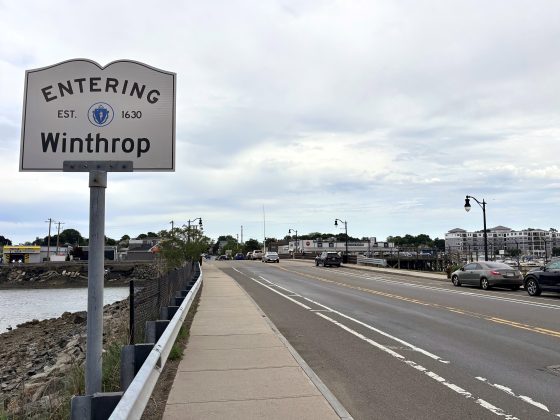
The Winthrop Town Council rejected the idea that it allow the immediate consideration of agenda items at the request of at least four members, in a stalled challenge of the council president that also accompanied a rise in ethical questions for the panel.
The council voted 5-4 on Tuesday against the idea of weakening the right of its president, Jim Letterie, to select its meeting topics. One ally of the proponents on related matters, the council’s vice president, Suzanne Swope, voted against the suggested change after the town attorney, Jim Cipoletta, warned that such a step would violate state rules concerning public notice of the council’s upcoming agenda items.

The council did not, however, act on Mr Cipoletta’s assessment that even the Town Council’s existing rules also violate the state’s procedures. Those existing rules allow the Town Council to consider adding any agenda item with a unanimous council vote, while state rules say that municipal bodies should deviate from publicly posted agenda topics only in rare emergencies.
Public service
One Town Council member, Max Tassinari, later expressed concern that four members of the Town Council voted in favor of an action that the town attorney directly told them would violate state ethics guidelines. “We’re here to serve the public, and anything that subverts open meeting law erodes that trust,” Mr Tassinari said.
And Terence Delehanty, an attorney who is also a former chief of police and acting town manager in Winthrop, told the council that the proposal that won four votes appeared to be seeking a violation of both state and federal law. “If I don’t know what’s on the agenda, I can’t come and redress the government,” Mr Delehanty said. “It’s important for me to know what’s on the agenda.”
Yet the Town Council member who suggested the change, Joe Romano, said he sees the need for some alternative for the council to consider matters that the body’s president might not support. “These important discussions need to be happening in the public meeting, not behind closed doors,” Mr Romano said.
One possible solution for both achieving that goal, and addressing Mr Cipoletta’s concern about the Town Council’s existing rules, would be to eliminate altogether the council’s procedural rule giving the council president the power to decide agenda items, Mr Romano told The Pilot.
Rule change
”There is no point keeping a rule on the books that the majority of the council has an issue with, and I will support the council’s efforts on this issue moving forward,” he said.
Mr Romano is part of a faction, that also has included Ms Swope, that has challenged Mr Letterie in recent council meetings, largely over their insistence on aggressive tactics to uphold the council’s resistance to complying with the state’s 3A housing law. The remaining members of Mr Romano’s faction – Patrick Costigan, Paul Reardon and Martin Finn – voted to uphold the change proposed Tuesday by Mr Romano.
Mr Romano said after the meeting that he did not see their effort as specific to the matter of 3A – which generally requires an expansion of multifamily housing across eastern Massachusetts – and said it instead reflected a broader problem among council members “who have told me about their past troubles in getting issues on the agenda.”
The council’s handling of the matter nevertheless added to a list of procedural and ethical concerns confronting the body, including questions of how the council posts its meeting minutes and handles potential recusals, how it appoints members of town commissions, and how the town more broadly responds to public records requests.
At the Tuesday session, two members of the public described extended waits for records requests, in particular those involving the 3A battle. The Town Council also has multiple instances of not meeting state rules stating that its meeting minutes generally must be posted within either 30 days or by the time of its next three public meetings.
Ethics concerns
And several Town Council members have faced public criticisms of their decisions to engage in council debates and decisions – often related to the 3A matter – in which they have apparent personal stakes.
Such members include Ms Swope, who as council vice president has played a leading role in fighting 3A compliance from her Town Council seat, often citing unsubstantiated beliefs in its effects on her residence at the Seal Harbor condominium complex; while her daughter has led that same fight among supportive Winthrop residents.
Ms Swope, in disclosure forms filed with the town, has argued that none of those matters disqualify her from acting on the 3A question because she sees no financial interest in the matter and because her daughter’s legal work on the topic is performed pro bono.
In the case of her daughter, Ms Swope also has argued that any conflict of interest is resolved by her public admission of the relationship. As for Seal Harbor, she has cited a state rule that allows her council participation if the same financial effect on her applies to at least 10 percent of the town’s population.